Brewing Like a Viking: Spring Ales and Meads
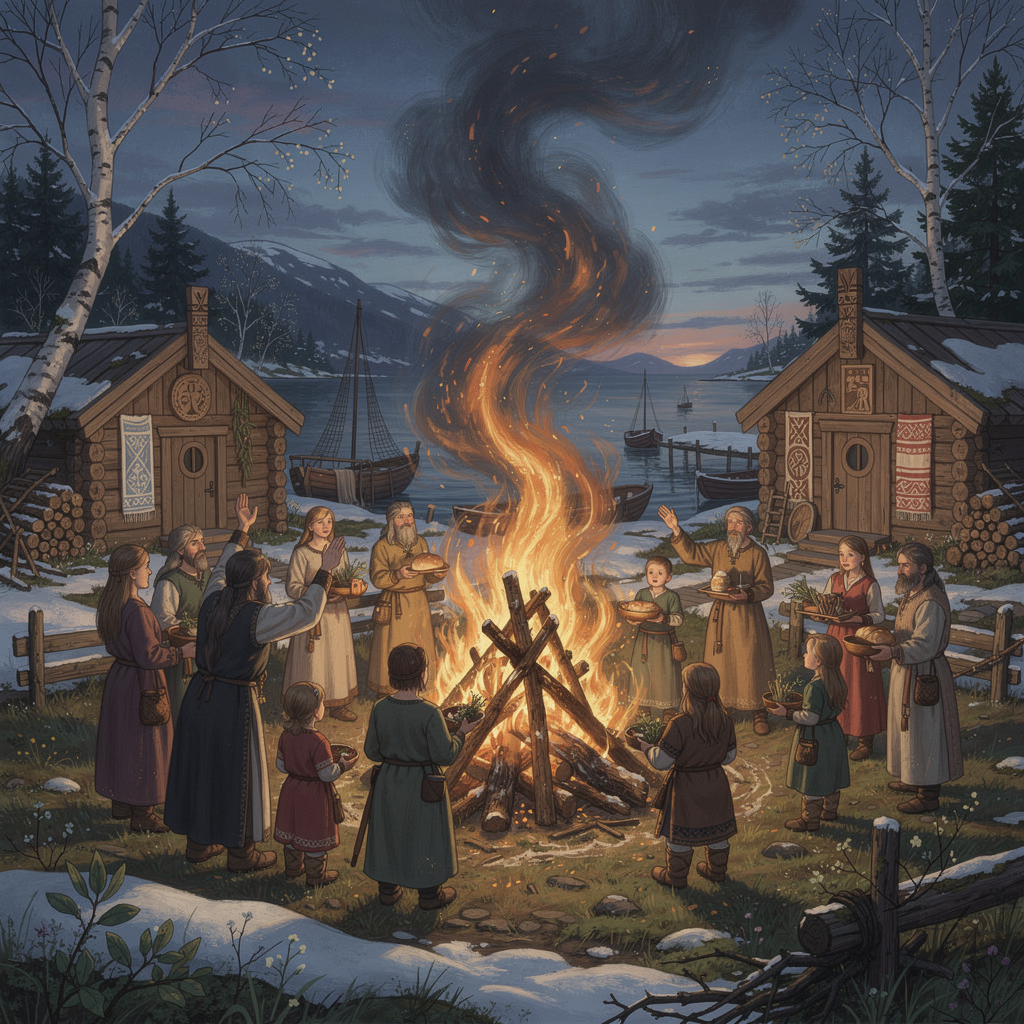
As the last sheets of ice begin to loosen their hold on the fjord and the days stretch a little longer with each passing sunrise, the Viking world slowly awakens from winter’s grip. Snow still clings to the shaded hillsides, but beneath it the earth softens, dark and ready for life again. This quiet transformation is more than seasonal change. For Norse communities, it marks a turning point in the cycle of survival, belief, and renewal that shaped their entire way of life.

Inside the longhouse, the shift is just as tangible. The heavy stillness of winter gives way to movement and intention as storage chests are opened, tools are brought out for inspection, and the familiar vessels used for brewing are carefully checked. These wooden tubs and barrels, often passed down through generations, hold more than practical value. They carry tradition, memory, and the knowledge of those who brewed before.
Brewing as Survival and Status
Brewing was not simply a household chore in the Viking Age. It was a responsibility, often overseen by women of the household, who held the knowledge of how to transform grain and honey into drink. In Old Norse society, a well-brewed ale was a sign of a well-run home, and laws even existed that tied ale production to social standing. A household was expected to brew enough ale for gatherings and seasonal feasts, and failing to do so could be seen as a sign of decline.
During winter, brewing slowed or stopped, not because it was unimportant, but because it was too important to risk waste. Grain stores were limited, and honey was one of the most valuable resources a family could possess. Mead in particular carried both economic and symbolic weight, as honey was not easy to obtain in the northern climate. Bees were kept where possible, but much honey came from wild hives, making it a prized and sometimes unpredictable resource.
When spring arrived, that balance shifted. As snow melted and rivers reopened, the wider world began to reconnect. Trade routes that stretched across rivers and seas came back to life, linking Scandinavian communities with distant regions such as the Byzantine Empire and the Abbasid Caliphate. From these connections came silver, spices, glassware, and sometimes even exotic ingredients that could find their way into high-status feasts and brews.
The Taste of Spring and the Craft of Brewing
At the same time, the land itself began to offer new resources. Early herbs such as juniper, long used in Nordic brewing, became available again. Juniper was not only valued for its flavor but also for its preservative qualities, and it played a role similar to hops before hops became widespread in Europe. Birch leaves and other early growth could also be used, lending a fresh and slightly sharp character to spring ales.
Ale, known in Old Norse as öl, was central to everyday life. It was consumed daily and often safer than water, as the brewing process reduced harmful bacteria. It also provided calories and nutrients, making it an essential part of the Viking diet. Each batch of ale reflected the household that produced it, shaped by local ingredients and inherited techniques rather than fixed recipes.
Mead, or mjǫðr, occupied a more elevated place, deeply tied to mythology and status. In Norse myth, mead was not just a drink but a source of wisdom and inspiration. The most famous example is the story which tells of Odin himself and his relentless pursuit of the Mead of Poetry. According to Norse myth, this powerful drink was guarded by the giant Suttungr, hidden deep within a mountain. Odin, driven by his hunger for knowledge, transformed himself into an eagle after seducing the guardian’s daughter, Gunnlöð, who had watched over the mead. In this form, he escaped with the precious liquid, carrying it back to the gods while spilling a few drops across the world below. Those fallen drops, it was said, became the gift of poetry among humankind, a reminder that even divine wisdom could be shared, though not always perfectly or intentionally.
This connection between mead and divine inspiration gave the drink a powerful symbolic role. Serving mead at a gathering was not just an act of hospitality but a gesture that echoed myth and tradition. It connected the drinkers to stories of gods, giants, and the origins of wisdom itself.

Ritual, Community, and the Return of Spring
Spring brewing often carried echoes of these beliefs. As the first batches were prepared, some households may have made small offerings, dedicating a portion of the brew to gods associated with fertility and growth. Freyr, a deity closely linked to prosperity, harvest, and peace, was particularly important during this time of year. His blessings were sought not only for crops but for the overall well-being of the community. Freyja, associated with love and fertility, also held a place in these seasonal transitions.
The brewing process itself was both practical and deeply sensory. Water was heated, often over an open fire, while grain was mashed to release its sugars. The absence of standardized tools meant that much depended on the brewer’s experience, their sense of timing, and their ability to read subtle changes in smell, texture, and taste. Yeast, not fully understood in scientific terms, was preserved from previous batches or allowed to develop naturally from the environment.
As brewing progressed, the longhouse would fill with rich and familiar scents. The warmth of grain, the sweetness of honey, and the sharp notes of herbs created an atmosphere that marked a clear departure from the sterile cold of winter. These smells were not only comforting but meaningful, signaling that life had resumed its forward motion.
When the ale or mead was ready, it became part of shared experience. Drinking was rarely a solitary act in Norse society. It was tied to feasts, agreements, storytelling, and ritual. The concept of the symbel, a formal drinking gathering, highlights this connection. During a symbel, participants would pass a drinking horn, make toasts, swear oaths, and recount deeds. These moments reinforced social bonds and personal honor, with the drink serving as both medium and witness.
Spring gatherings, even if smaller in scale, carried similar energy. The first brews of the season were tasted with an awareness of what had been endured and what was now possible. They accompanied meals that were slowly becoming more varied as supplies improved and new resources became available.
Brewing also existed alongside other preparations that defined the season. Ships were being repaired for voyages, fields were being prepared for planting, and plans were forming for trade or travel. In this broader context, brewing may have seemed like a quieter task, yet it played a crucial role in grounding these larger ambitions in daily life.
It is easy to view Viking culture primarily through the lens of raids and exploration, but these aspects were only part of a more complex society. The act of brewing, especially in spring, reveals a different perspective. It shows a people deeply connected to their environment, attentive to seasonal change, and invested in practices that sustained both body and spirit.
As the cup is raised in the dim light of the longhouse, filled with fresh ale or carefully made mead, it carries more than flavor. It holds the memory of winter, the knowledge of generations, and the myths that gave meaning to the world. In that moment, the return of spring is not only seen in the thawing landscape but tasted, shared, and understood as part of an ongoing cycle that defines life itself.